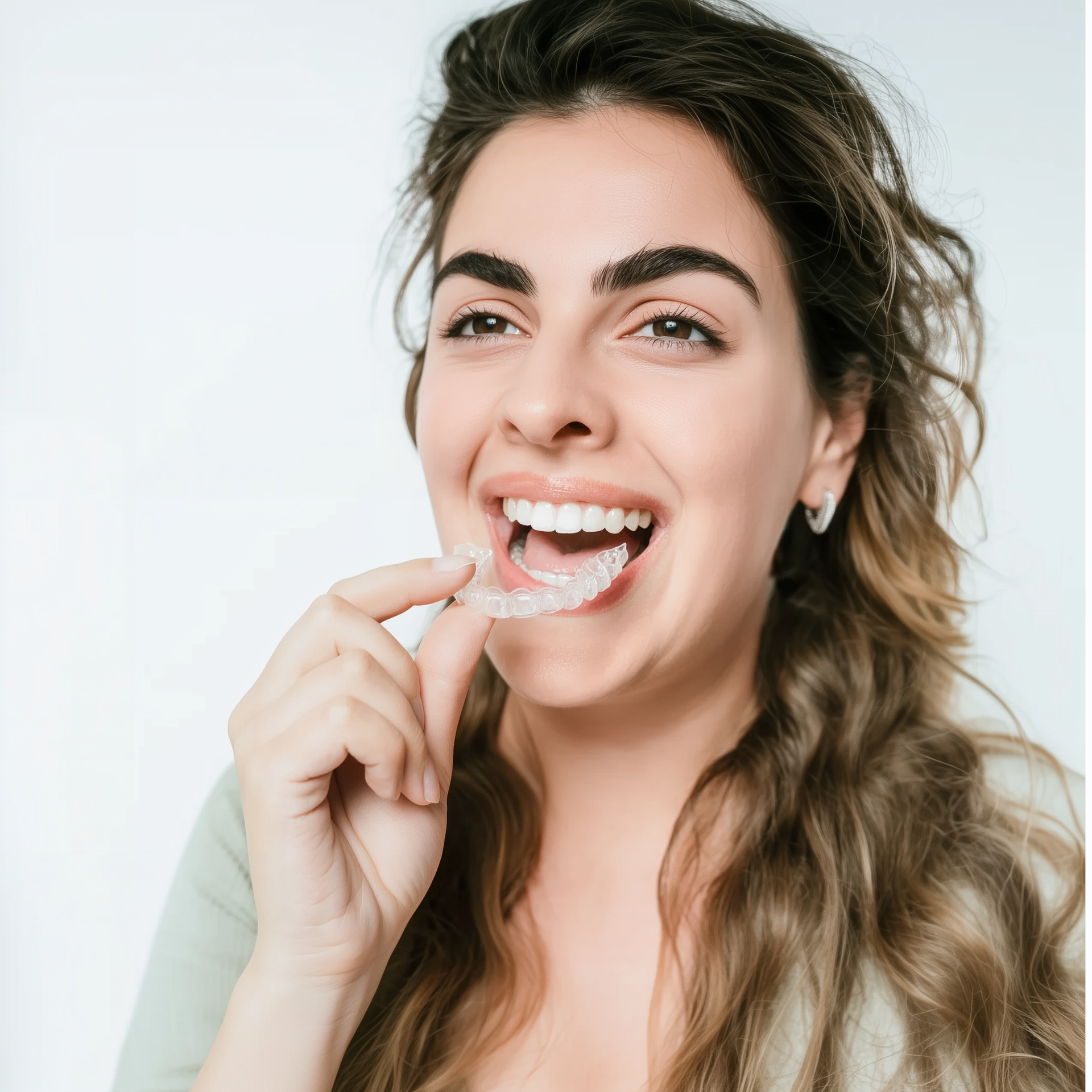
Escott Orthodontics explains why retainers are essential for protecting your new smile.
KEY TAKEAWAYS
- Teeth begin moving the same night you stop wearing your retainer. The biological forces never pause. Your retainer is what holds them in check.
- Retainers aren't for two years. They're forever. Some level of nightly or weekly wear remains standard for the rest of your life, just at a reduced cadence over time.
- A loose retainer is the most dangerous kind. An ill-fitting retainer gives a false sense of protection while your teeth shift underneath.
- Your retainer protects more than your smile. Bite stability, jaw function, and even TMJ symptoms all connect to long-term retention.
- It's almost never too late to fix retainer relapse. Our team treats patients of all ages and across all time frames. Call any of our three Florida offices to start. We are here for you.
Introduction
You're standing in line at Universal Orlando on a Saturday afternoon, reaching into your pocket for a stick of gum, and out comes your retainer wrapped in a paper towel from last night's dinner. You'd meant to put it back in. That was four days ago. The drift away from retainer wear almost always starts exactly like this: not with a decision, but with a quiet series of forgotten moments.
If that sounds familiar, you are in very good company. At Escott Orthodontics, Dr. Christopher Escott and Dr. Hunter Davis hear some version of this story every week from patients across Lake County, College Park, and Baldwin Park. Most families know retainers matter. What they don't always know is what's actually happening when wear stops, why retention behaves differently than they expect, and how reversible most shifting still is. This guide walks through five surprising truths about retainers, what each one means for your smile, and how our team can help.
Meet Dr. Escott and Dr. Davis
Dr. Christopher Escott and Dr. Hunter Davis lead our team across three Central Florida locations with specialty orthodontic training and a shared commitment to patient-first care. Together they have helped thousands of Sunshine State families achieve confident, healthy smiles through every phase of treatment, from initial consultation through long-term retention.
Our practice has been named "Best of the Best: Orthodontist" by Lake & Sumter Style Magazine five years running, and our team has earned more than 775 five-star Google reviews. Whether you finished treatment last month or fifteen years ago, we're here to help.
Why Retention Is the Hardest Phase to Get Right
Active treatment is in many ways the easy part. You see your orthodontist regularly, the appliances do the work, and progress is visible. Retention is harder: it lasts forever, the appliance is removable, and progress is invisible. The truths below explain what's actually happening, and why patients consistently underestimate this phase.
Truth #1: Your Teeth Start Moving the Same Night You Stop
Most patients assume there's a grace period: a buffer of days or weeks before anything changes. There isn't. The biology that protects retention runs continuously, and the moment you stop wearing your retainer, the forces that want to move your teeth resume immediately.
TRUTH 1 Your Teeth Start Moving the Same Night You Stop
There is no grace period
The periodontal ligament (the thin tissue layer that holds each tooth in place) is constantly remodeling. While your retainer is in, that remodeling stabilizes around your current alignment. The moment retention forces stop, the same biology that made orthodontic treatment possible begins moving your teeth in the opposite direction. The shift is microscopic at first, but it begins right away.
Don't think of "missing a night" as harmless. Each missed night is real biological progress against the stability you've built. The good news: catching the lapse early lets a few nights of consistent wear often reverse the loss completely.
Truth #2: Retainers Are Forever, Not Just for a Couple Years
This is the truth most patients resist hardest. Patients often hear "wear it for a year or two" and assume retention has an expiration date. It doesn't, and the orthodontic profession has moved firmly toward this consensus over the last two decades.
TRUTH 2 Retainers Are Forever, Not Just for a Couple Years
Lifetime retention is now the clinical standard
Teeth shift throughout life, not just immediately after treatment. Lower incisor crowding, in particular, develops in most adults even without prior orthodontic treatment as a natural part of aging. Your retainer is the only thing actively working against that lifelong tendency. The wear schedule reduces over time (from nightly to a few nights per week), but it never goes away entirely.
Plan for retention as a lifelong commitment, not a temporary one. A few nights of wear per week, for life, is dramatically cheaper and easier than refresher treatment every decade. This is one of the smartest small investments in your long-term smile.
Worried About Your Retainer?
A consultation at any of our three Central Florida offices gives you an honest evaluation. No judgment about the gap. Whether last month or fifteen years ago, we're here to help.
→ SCHEDULE YOUR CONSULTATIONTruth #3: Your Retainer Protects More Than Your Smile
Patients often think of retention purely in cosmetic terms. The clinical reality is that retention affects systems well beyond appearance.
TRUTH 3 Your Retainer Protects More Than Your Smile
Bite, jaw, and function all depend on it
Your bite is the relationship between dozens of moving parts: teeth, jaw joints, chewing muscles, and the tissues that connect them. When teeth shift even slightly, your bite contact patterns change, your jaw adapts to find a new resting position, and the muscles around your TMJ recalibrate. Over time, this can lead to uneven wear on specific teeth, jaw soreness, headaches, and changes in chewing comfort that patients don't initially connect to retainer wear.
If you've noticed any new jaw clicking, morning soreness, headaches, or chewing that feels different on one side, your retention history is worth bringing up with us. Sometimes the answer is renewed wear; sometimes it's a refresher treatment plan.
Truth #4: A Loose Retainer Is the Most Dangerous Kind
This is the truth that catches patients most off guard. A retainer that feels loose or moves around in your mouth is often worse than no retainer at all, because it provides a false sense of compliance while teeth shift underneath.
TRUTH 4 A Loose Retainer Is the Most Dangerous Kind
False security beats real concern every time
A properly fitting retainer applies continuous gentle pressure that holds teeth in their corrected positions. A loose retainer (one that has stretched, warped, or no longer fits because teeth have already shifted) doesn't apply enough pressure to hold the position. Patients feel like they're being responsible by wearing it, but the teeth keep moving. By the time they notice, the loose retainer has become a worse fit, and the cycle continues.
If your retainer feels loose, rattles, or doesn't snap firmly into place, that's a signal to call us. A loose retainer should not be ignored or accepted as "fine." Give us a call and we’ll help determine the best next step.
Truth #5: It's Almost Never Too Late to Fix Retainer Relapse
This is the truth we most want patients to hear. Whatever the gap, whatever the shifting, there's almost always a path forward.
TRUTH 5 It's Almost Never Too Late to Fix Retainer Relapse
No expiration date on a great smile
Patients sometimes assume that years of relapse mean they've missed their chance. The reality is that adult orthodontic treatment has advanced significantly, and we routinely treat patients who finished braces ten, twenty, or even thirty years ago. Treatment options for relapse range from simple new retainers for early shifting, to short courses of Invisalign for moderate cases, to traditional braces for more significant relapse. The path depends on what your imaging shows, not on how long it has been.
If you've been avoiding the call because you're worried about being judged, please don't. We see this every week, and our team's job is to help you move forward with a smile you are proud of.
Smart Retention Habits That Make Compliance Easy
Across all five truths, the same handful of habits make retainer compliance dramatically easier. Here are the five we recommend to every patient.
- Keep your retainer somewhere visible. On your nightstand or bathroom counter, never buried in a drawer. If you see it, you'll wear it.
- Build a retainer case habit. Always remove your retainer and place it into its case, never into a napkin. The single biggest reason retainers get thrown out is napkin storage at restaurants.
- Pack a backup retainer kit for travel. Case, cleaning solution, soft toothbrush. Vacations and theme park days are when retainer compliance suffers most, especially in Florida.
- Replace lost retainers immediately. Every week without retention adds risk. Replacement is faster and more affordable than most patients expect.
- Reach out at the first sign of looseness or shifting. Catching it at week 2 is dramatically different from catching it at year 2. Our team is reachable at any of our three offices.
Need a New Retainer? Escott Orthodontics Has You Covered
Our Retainer Store at Escott Orthodontics makes replacing a lost or aged-out retainer about as easy as it gets. You can order replacements online whenever you need them, whether you are a current patient, a returning one, or already part of our Retainer Club.
Club members get a few extras worth highlighting: a 3D digital copy of your smile kept on file so a new retainer is always one order away, on-demand replacements mailed to your home or held for free office pickup, member-only pricing on every retainer ordered, and a welcome package for new sign-ups that includes custom whitening trays plus a professional whitening gel kit.
Order Your New Retainers Here!Why Florida Families Trust Escott Orthodontics
For more than a decade, families across Central Florida have chosen Escott Orthodontics for braces, Invisalign, and long-term smile care. Here is what sets our practice apart.
- Two specialty-trained orthodontists: Dr. Christopher Escott and Dr. Hunter Davis bring deep clinical experience and a patient-first philosophy to every visit
- Three convenient Central Florida locations: Lake County, College Park (Orlando), and Baldwin Park (Orlando), serving families from Mount Dora and Tavares to Winter Park, Orlando, and the surrounding communities
- Named "Best of the Best: Orthodontist" by Lake & Sumter Style Magazine five years in a row, with more than 775 five-star Google reviews from Sunshine State families
- Complete treatment options: traditional braces, Invisalign clear aligners, and long-term retention support for every life stage and lifestyle
- Sunshine in every smile: we believe great orthodontic care should feel as warm as Florida itself, no judgment about gaps in care, just an honest plan forward
Conclusion
So what happens if you don't wear your retainer? Teeth start shifting the night you stop, retention is a lifelong commitment, the retainer protects more than just your smile, and a loose retainer is more dangerous than patients realize. The most important answer is the last one: it's almost never too late to get back on track. Our team at Escott Orthodontics is here whenever you're ready.
ESCOTT ORTHODONTICS
Sunshine in Every Smile
Schedule Your Consultation Today
Three Central Florida Locations
College Park (Orlando)| 407-648-5511
Baldwin Park (Orlando)| 407-898-6711
Website: escottortho.com
→ BOOK YOUR CONSULTATION TODAYFrequently Asked Questions
How long can I go without my retainer before I see changes?
Visible changes typically take 4 to 12 weeks of inconsistent wear, though biological shifting begins within hours. Lower front teeth are the first to show measurable change. If you've gone 2 weeks without wear, resume nightly use immediately. If you've gone 2 months or longer, call us before forcing an old retainer that may no longer fit correctly.
Can I just buy a replacement retainer online?
We strongly recommend against this. Online retainer services don't have access to your treatment records, your imaging, or knowledge of what your teeth looked like at the end of active treatment. A retainer that doesn't fit your current arch precisely can accelerate shifting rather than prevent it. A custom replacement from our office is faster and more affordable than most patients expect.
Do I need to wear my retainer during the day?
In the first few months after braces or Invisalign, your orthodontist may recommend extended daily wear. Once you've moved into long-term retention, nightly wear is typically sufficient, eventually transitioning to a few nights per week. Daytime wear is no longer needed for most patients after the initial retention phase.
Will my retainer change color or get cloudy over time?
Yes, this is normal. Clear retainers cloud over time from saliva, food residue, and water minerals (especially in Florida's hard water). Cloudiness alone doesn't mean replacement is needed. Fit matters most. We can evaluate at your next visit.
My child finished treatment two years ago and has barely worn their retainer. Should I be worried?
Concerned, yes. Panicked, no. Two years of inconsistent wear is plenty of time for noticeable shifting, especially in lower front teeth. Schedule a quick evaluation at any of our three offices. We'll assess what has moved and whether a new retainer or a clear aligner refresher would restore the alignment. Most two-year cases are still very correctable.
Sources
- Martin, C., Littlewood, S.J., Millett, D.T., Doubleday, B., Bearn, D., Worthington, H.V., & Limones, A. (2023). Retention procedures for stabilising tooth position after treatment with orthodontic braces. Cochrane Database of Systematic Reviews, 2023(5), CD002283. Read full review
- Johnston, C.D., & Littlewood, S.J. (2015). Retention in orthodontics. British Dental Journal, 218(3), 119–122. View on PubMed
- Littlewood, S.J., Kandasamy, S., & Huang, G. (2017). Retention and relapse in clinical practice. Australian Dental Journal, 62(Suppl 1), 51–57. View on PubMed
- American Association of Orthodontists. Orthodontic Treatment Resources for Patients. View AAO resources
- American Dental Association. Braces. View ADA resources
This blog is intended for general educational purposes only and is not a substitute for personalized medical, dental, or orthodontic advice. Please contact Escott Orthodontics or your healthcare provider with specific questions about your individual retainer, retention plan, or long-term orthodontic care.