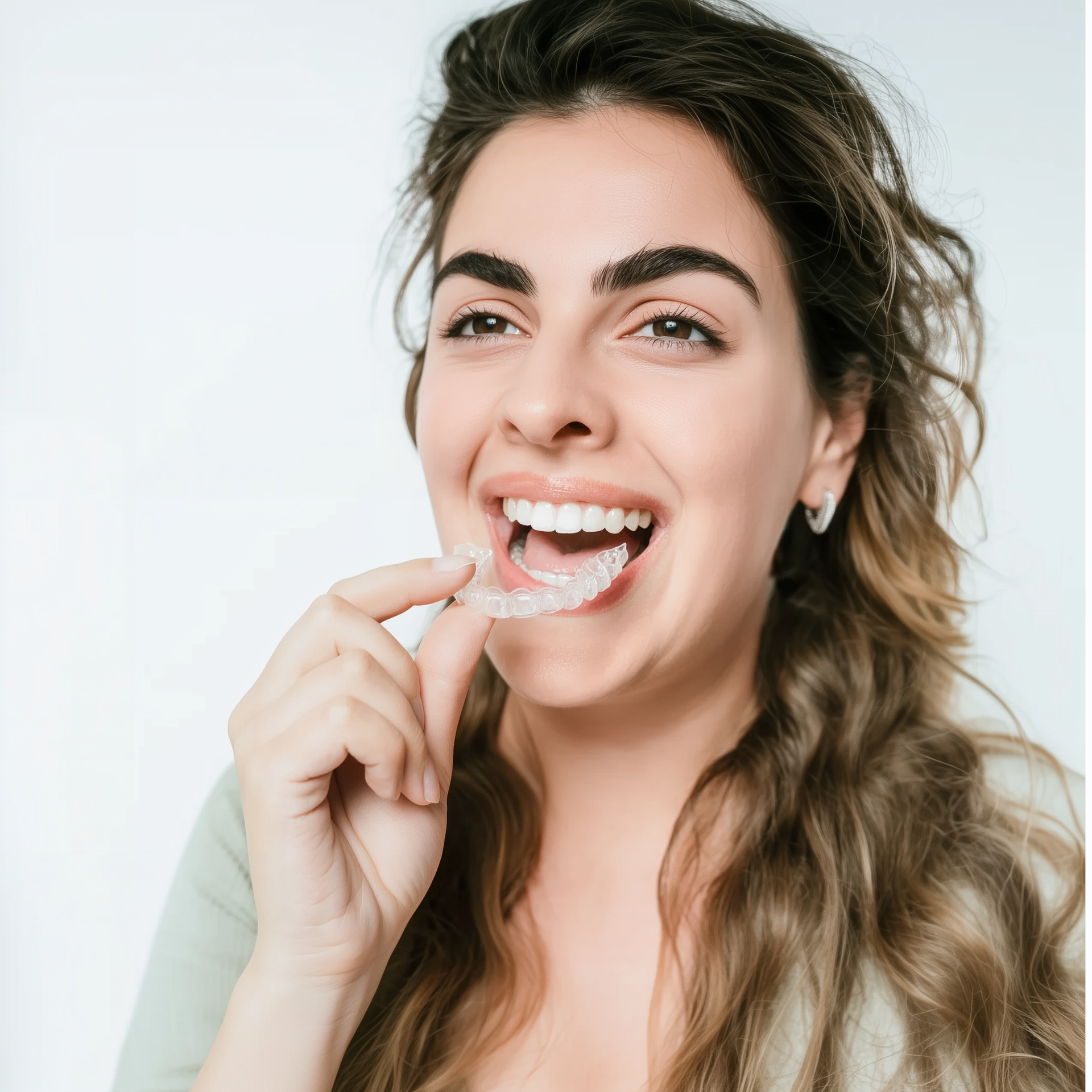
Escott Orthodontics recommends these everyday essentials to keep your smile healthy all semester long.
Key Takeaways
- Our team answers the same question every fall across all three of our offices, and it is almost always about what to pack.
- White spot lesions appeared in 38 percent of patients six months into treatment, compared with 11 percent at the very start, which means the early months are when a good routine pays off most.
- Most school-day braces problems are comfort problems rather than emergencies, and a small piece of wax solves the majority of them.
- Aligner patients need one item braces patients do not, and forgetting it is the most common reason a tray goes missing.
- The full list runs to 8 items, and all of them fit inside a standard pencil pouch.
The bracket lets go halfway through a slice of cafeteria pizza. The wire that felt perfectly fine at breakfast starts pressing into the inside of a cheek somewhere around sixth period. An aligner goes into a paper napkin at lunch, and the napkin goes into the trash can by the door. Those three things account for most of the calls our front desk takes on a Monday morning.
We treat students across Lake County and both sides of Orlando, and after more than 775 five-star reviews, we have noticed something about the families who get through a school year without much drama. They are not the ones who avoid problems. They are the ones who packed for them. Dr. Escott and Dr. Davis hand out the same short list every August, and it has barely changed in years, because the problems have barely changed either.
So here is that list. Eight items, all of them small, most of them inexpensive, and together they handle almost everything a school day can throw at a set of braces.
Why the First Few Months Matter Most
Enamel is tough, but it does not love being trapped under a food particle for eight hours. When plaque sits against a bracket day after day, the surface underneath can start to lose minerals, and that shows up as a chalky white square once the braces come off. Orthodontists call these white spot lesions (WSLs). They are preventable, and the prevention is not complicated. It is a toothbrush and two minutes.
None of that is meant to worry anyone. It is the opposite. A 2025 systematic review in Orthodontics and Craniofacial Research pooled 57 studies covering more than 9,000 patients and found the same pattern across all of them, which tells us the risk is well understood and well documented. Something understood that thoroughly is something you can plan around. The plan fits in a pencil pouch.
Item 1: A Soft-Bristle Toothbrush That Lives in the Backpack
The toothbrush at home does not help at 12:15 in the afternoon. Send a second one, soft-bristled, in a vented case so it can dry out between uses. Soft matters more with braces than without, because a stiff brush pushed hard around brackets irritates the gum line and does not actually clean any better.
We tell students to keep it in the same pocket every day. The kit that gets used is the kit that has a home.
Item 2: A Travel Tube of Fluoride Toothpaste
A small tube, replaced when it runs out, and that is the whole instruction. Fluoride toothpaste is the single most studied tool for keeping enamel strong during treatment, which is exactly why the American Dental Association (ADA) puts it at the center of its guidance for anyone in braces. If your student cannot brush after lunch on a given day, a rinse and a swish with water is a reasonable swap, as needed.
Item 3: Floss Threaders or Orthodontic Flossers
Flossing with braces is genuinely awkward the first few times, and that is the reason it gets skipped. Threaders solve it. So do the pre-strung orthodontic flossers, which most students find easier because there is nothing to thread. Either works. The one that gets used is the right one.
Item 4: An Interproximal Brush
This is the tiny cone-shaped brush that looks like a pipe cleaner, and it is the item most people leave out of their braces care kit. It slides under the wire and clears the space between the bracket and the gum, which is precisely where the white spots tend to form.
If your student is in traditional braces, this is the one item we would ask you not to skip. It reaches what a toothbrush cannot.
Item 5: Orthodontic Wax
A poking wire is uncomfortable, not dangerous, and wax turns it into a non-event. Dry the bracket with a tissue, pinch off a piece of wax about the size of a pea, roll it into a ball, and press it over whatever is rubbing. It will stay put through a class period. It will not stay put through lunch, so plan to reapply.
Two containers is the right number. One in the backpack, one in a locker or a gym bag.
Item 6: A Small Mirror
School bathroom mirrors are usually mounted too high, too far from the sink, or occupied. A compact mirror the size of a phone means a student can actually see what they are doing in thirty seconds at a desk or in the corner of a locker room. It sounds like a small thing. It is the difference between a real check and a guess.
Item 7: A Refillable Water Bottle
Water does more work here than people expect. Swishing after eating loosens most of what gets caught around brackets, and steady sipping through the afternoon keeps saliva flowing, which is the mouth's own defense against the acid that causes decay. On days when brushing does not happen, this is the fallback that keeps the day from being a total loss.
Item 8: A Case
For Invisalign patients, a bright, labeled case is the whole ballgame. Aligners disappear in napkins, and napkins go in the trash. A hard case in a color nobody could mistake for garbage prevents the single most common aligner loss we see. The same rule applies to a retainer once treatment ends.
Braces Kit or Aligner Kit? The Two Are Not the Same
Most of the list overlaps, but each treatment type has items the other does not need. Here is the split.
The Two-Minute Routine That Does the Heavy Lifting
A kit only works if it is opened. The students who keep their enamel bright are not doing anything elaborate. They are doing something small, three times a day, without thinking much about it.
Three Things That Go Wrong, and What to Do About Each
Almost every call we get during the school year is one of these three. None of them requires panic, and none of them requires a trip to an emergency room.
One more thing worth saying to teenagers directly, because they are the ones actually carrying the bag: the whole point of treatment during the teen years is that the jaw is still growing and cooperating. A kit is not busywork. It is the part of the process you control.
A consultation with our team is free, and it comes with no pressure and no obligation. We will look at what is developing, tell you honestly whether treatment makes sense now or later, and answer every question you brought with you.
Lake County 352-383-6166 | College Park 407-648-5511 | Baldwin Park 407-898-6711
>> Book your free consultation todayWhy Families Across Lake County and Orlando Choose Escott Orthodontics
- Three offices, one standard of care. Mount Dora, College Park, and Baldwin Park in Orlando, so a broken bracket on a Tuesday does not mean a forty-minute drive.
- More than 775 five-star reviews from the families who trusted us with their smiles.
- Named Best of the Best Orthodontist five years running. Recognized by Lake Sumter Style Magazine for five consecutive years.
- Among the top 1 percent of Invisalign providers. Our Diamond Provider status places us among the top 1% of Invisalign providers, recognizing the depth of experience we've gained by helping thousands of patients achieve healthier, more confident smiles.
- We answer the school-day questions. Call or text any office, and you will reach people who know what a Tuesday afternoon with a loose bracket looks like. We are here and happy to help.
- Free consultations, always. For a nine-year-old, a fifteen-year-old, or a parent who has been thinking about it for a decade. We cannot wait to meet you.
- A team that truly loves what we do. Every finished smile brings a little more sunshine, and the excitement of the final reveal never gets old.
Pack It Once, Use It All Year
A braces care kit is not really about emergencies. It is about the ordinary Tuesday, the lunch that got messy, the sixty seconds after it. Do that part well, and the rest of treatment tends to take care of itself.
Build the pouch this week, put it in the backpack, and you are ready to go. If a question comes up that this article did not answer, our frequently asked questions page covers a lot of ground, and our team is a phone call away at any of our three locations.
Sunshine in Every Smile
Your free consultation is waiting, with no cost and no obligation.
Call or text any of our three offices:
Lake County (Mount Dora): 352-383-6166
Orlando, College Park: 407-648-5511
Orlando, Baldwin Park: 407-898-6711
Proudly serving Mount Dora, Eustis, Tavares, Sorrento, Zellwood, College Park, Baldwin Park, Winter Park, Maitland, Audubon Park, and downtown Orlando.
Office Hours (all three locations):
Frequently Asked Questions
What should be in a braces care kit for school?
Eight items: a soft-bristle toothbrush in a case, travel fluoride toothpaste, floss threaders, an interproximal brush, orthodontic wax, a small mirror, a refillable water bottle, and a labeled case. All of it fits in a pencil pouch and costs less than a pair of cleats.
What do I do if a bracket comes loose during the school day?
Leave it in place, cover it with wax, and finish the day. A loose bracket is not an emergency as long as it is still attached to the wire. Call the office nearest you, at 352-383-6166 in Lake County, 407-648-5511 in College Park, or 407-898-6711 in Baldwin Park, and we will get you scheduled for a quick repair.
Can my child brush at school with braces?
Yes, and sixty seconds is enough to make a real difference. Most students find it easiest right after they finish eating, before the next class starts. If there is no time or no sink, a hard swish with water from a bottle removes a surprising amount.
How often should aligners be worn during the school day?
Twenty-two hours a day, which means trays come out only for meals and for brushing. The two hours of daily removal time goes fast when lunch and snacks are counted, so a hard case in the backpack is what keeps a tray from ending up in the trash.
Does Escott Orthodontics charge for a consultation?
No, consultations are always free at all three of our locations. You can call or text Lake County at 352-383-6166, College Park at 407-648-5511, or Baldwin Park at 407-898-6711, and we will find a time that works around the school schedule.
Sources
- Tufekci, E., et al. (2011). Prevalence of white spot lesions during orthodontic treatment with fixed appliances. The Angle Orthodontist. DOI: 10.2319/051710-262.1. Read full study.
- Julien, K. C., et al. (2013). Prevalence of white spot lesion formation during orthodontic treatment. The Angle Orthodontist. DOI: 10.2319/071712-584.1. Read full study.
- Hussain, U., et al. (2025). Prevalence, incidence and risk factors of white spot lesions associated with orthodontic treatment: a systematic review and meta-analysis. Orthodontics and Craniofacial Research. DOI: 10.1111/ocr.12888. Read full study.
- Sardana, D., et al. (2023). White spot lesions in orthodontics: consensus statements for prevention and management. The Angle Orthodontist. Read full study.
- American Journal of Orthodontics and Dentofacial Orthopedics. White spot lesions: prevention and treatment. View clinical resource.
This article is provided for general educational purposes and does not constitute medical or dental advice. It is not a substitute for an examination, diagnosis, or treatment plan from a licensed orthodontist. Every patient is different, and recommendations vary based on individual clinical findings. Hygiene routines and appliance care instructions described here are general guidance only, and any student experiencing pain, a broken appliance, or a swallowed component should contact our office directly rather than relying on this article.