Learn from Escott Orthodontics how your bite and jaw alignment may impact your quality of sleep.
Straight teeth alone will not cure a sleep disorder, but your bite and jaw alignment can influence how comfortably you rest. Crowded teeth and bite issues can encourage mouth breathing, nighttime clenching, and jaw tension, all of which can disturb sleep. True obstructive sleep apnea is a medical condition that must be diagnosed by a physician, not an orthodontist. At Escott Orthodontics in Central Florida, we evaluate teeth, jaws, and facial structure together, and we refer patients to a sleep specialist when an exam raises concerns about airway health.
- Nearly 30 million American adults have obstructive sleep apnea, and about 23.5 million of those cases are undiagnosed, according to the American Academy of Sleep Medicine.
- Braces and aligners do not cure sleep apnea. Orthodontists screen for warning signs and refer patients to sleep physicians for diagnosis and treatment.
- A healthy bite can support better rest by easing jaw tension, reducing grinding damage, and making it easier to keep your lips closed and breathe through your nose.
- Jaw structure is shaped by genetics and growth, which is one reason the American Association of Orthodontists recommends every child be screened by age 7.
- Loud snoring, gasping during sleep, morning headaches, and heavily worn teeth are all worth mentioning at your next orthodontic or medical visit.
The alarm goes off after a full night in bed, and you are still tired. Your jaw feels tight, your teeth are sore, and your spouse mentions the snoring again over coffee.
Sound familiar? Adults from Baldwin Park, Winter Park, and downtown Orlando tell us versions of this story every week.
With Dr. Christopher Escott, a top 1% Invisalign provider practicing since 2011, and Dr. Hunter Davis, a board-certified orthodontist, patients benefit from a team experienced in creating healthier, well-aligned smiles. But could orthodontic treatment also help adults sleep better?
The honest answer is more interesting than a simple yes or no. Your teeth, jaw alignment, and airway are connected, and understanding that connection can help you rest easier and know when to seek medical care.
How Your Teeth, Jaw, and Airway Work Together
Your teeth sit in two jaws that do far more than chew. The lower jaw supports your tongue, and both jaws help shape the space behind them: the upper airway you breathe through all night.
According to the National Heart, Lung, and Blood Institute (NHLBI), your genes help determine the size and shape of your skull, face, and upper airway. Features like a large tongue or a naturally narrow airway can make nighttime breathing harder.
Tooth position matters here too. A narrow upper jaw, crowded teeth, or a lower jaw that sits far back can leave the tongue with less room to rest. That is why orthodontists think about airway health while sleeping, not just about straight smiles.
Can Bite Issues Affect How You Sleep?
They can, in indirect but real ways. Bite issues rarely cause a sleep disorder on their own, but they can add nightly discomfort that chips away at sleep quality.
When your bite does not fit together evenly, your jaw muscles may work overtime to find a comfortable resting position. That tension can show up as clenching, morning jaw soreness, or headaches.
An uneven bite also concentrates grinding forces on certain teeth. Over time, that can mean worn enamel, sensitivity, and more restless nights.
We covered related ground in our post on how an overbite impacts your smile and health. A deep bite or a set-back lower jaw changes how your jaw rests, both awake and asleep.
Lip posture plays a role as well. When crowded or protruding front teeth make it hard for your lips to rest closed, it is easy to drift into mouth breathing at night, which can mean dry mouth, irritated gums, and lighter sleep.
What Is Sleep Apnea, and How Common Is It?
Obstructive sleep apnea (OSA) is a medical condition in which the upper airway repeatedly narrows or closes during sleep, briefly interrupting breathing. Each pause can pull the body out of deep sleep, often without the sleeper remembering it.
It is far more common than most people realize. The American Academy of Sleep Medicine (AASM) reports that nearly 30 million American adults have obstructive sleep apnea.
Loud snoring, gasping or choking during sleep, morning headaches, and daytime exhaustion are classic warning signs. So is waking up with a very dry mouth.
Do Braces or Aligners Cure Sleep Apnea?
No. Braces, Invisalign, and other aligners straighten teeth and correct bites, but they do not cure obstructive sleep apnea. Anyone who promises otherwise is getting ahead of the evidence.
People often search for sleep apnea and braces together, hoping one will fix the other. The American Association of Orthodontists (AAO) addressed this directly: physicians diagnose OSA, usually through a sleep study, and physicians lead its treatment.
So where do orthodontists fit? Screening and teamwork. Because we look closely at jaws, tooth wear, and facial structure every day, we are often the first to notice risk factors and raise the question.
At Escott Orthodontics, every new patient exam includes an evaluation of your teeth, jaws, and facial structure together. When something we see raises airway concerns, we say so, and we help you find the right medical specialist.
A consultation is a simple, low-pressure way to find out. Our doctors will evaluate your teeth, jaw alignment, and facial structure, then answer your sleep questions honestly.
Call or text our Baldwin Park office at (407) 898-6711, or schedule here.
How a Healthy Bite Can Support Better Rest
A healthy bite will not replace medical sleep care, but it supports more restful nights in three ways we see often in practice.
When teeth meet evenly, jaw muscles can truly relax instead of hunting for a stable position all night.
Teeth alignment that lets your lips rest gently closed supports breathing through your nose, which is the healthier way to breathe during sleep.
An even bite spreads nighttime forces across all your teeth, so no single tooth absorbs damaging wear.
For adults, getting there is far more discreet than the braces you remember from middle school. Options like Invisalign clear aligners and lingual braces fit quietly into professional life. You can read more about adult treatment on our site.
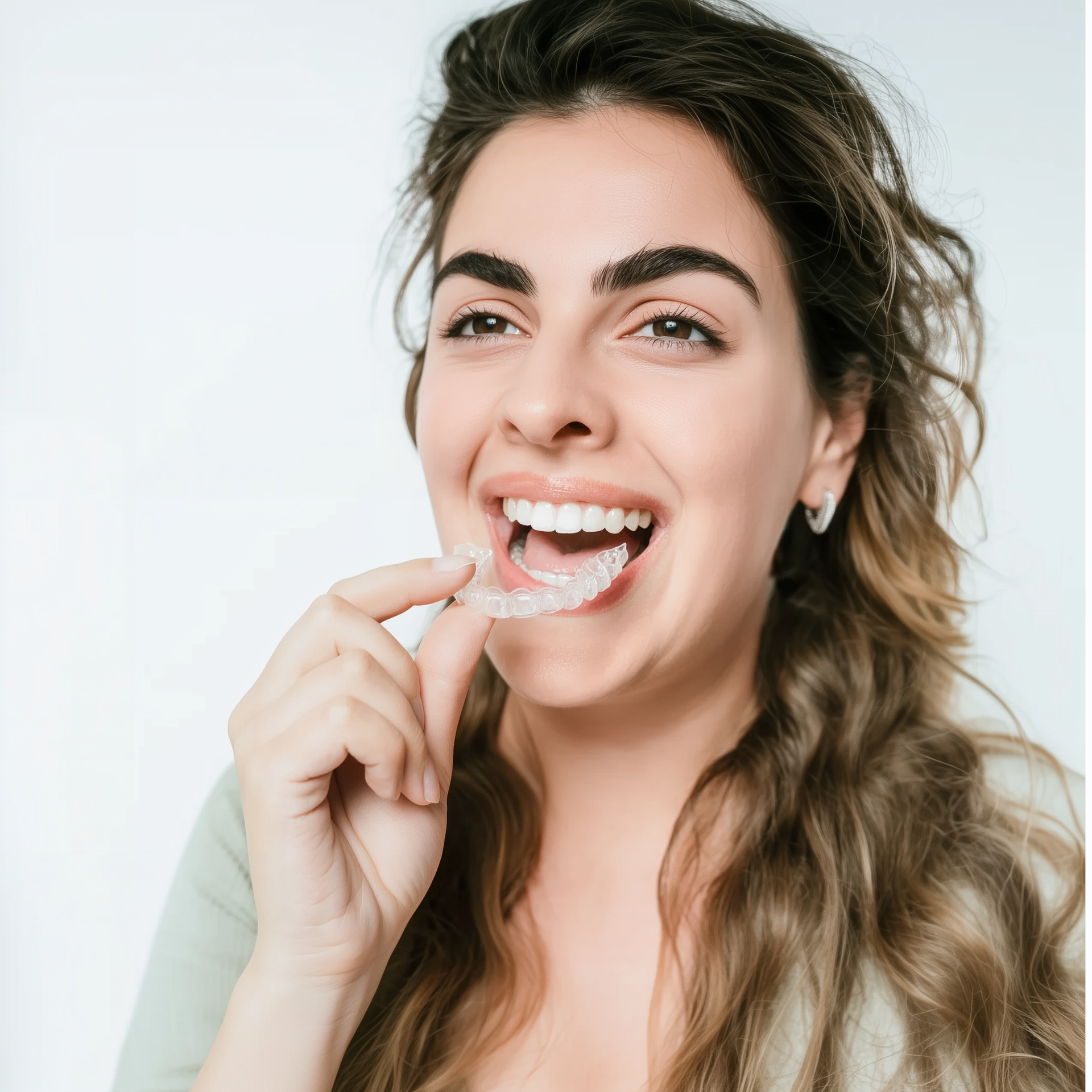
One practical note for aligner patients: aligners are worn about 22 hours a day, including overnight. Most people adjust to sleeping in them within a week or two.
Growing Kids, Jaw Development, and Airway Health
Childhood is when jaws are still growing, which makes it the best window to guide how they develop. The AAO recommends that every child be screened by an orthodontist by age 7.
At that first visit, we look at jaw growth, tooth eruption, and habits like persistent mouth breathing. Heavy snoring or very restless sleep in a child is worth mentioning too, since a pediatrician or an ear, nose, and throat specialist may need to take a look.
For some children with a narrow upper jaw or a crossbite, we may recommend maxillary expansion to create room for adult teeth. Research on expansion as a breathing treatment is still developing, so we recommend it for orthodontic reasons and coordinate with your child's medical providers.
An early evaluation keeps every option on the table while your child is still growing.
Signs Worth Bringing Up at Your Next Visit
Loud snoring, gasping or choking sounds, and restless tossing during sleep.
Morning headaches, jaw soreness, flattened or worn tooth edges, and waking with a dry mouth.
Mention these signs at your next orthodontic, dental, or medical visit, and ask whether a sleep evaluation makes sense for you.
None of these signs means you have a sleep disorder. They are simply worth a conversation with someone who can look at the whole picture.
Why Families Choose Escott Orthodontics
- We look at the whole picture. Every exam evaluates your teeth, jaws, and facial structure together, never teeth in isolation.
- Honest answers about sleep. We tell you what orthodontics can and cannot do, and we refer you to a sleep physician when your health calls for it.
- Recognized Invisalign experience. Dr. Escott is a top 1% Invisalign provider, and aligners are a popular choice for adults who value comfort and discretion.
- Board-certified care in Baldwin Park. Dr. Hunter Davis, a board-certified orthodontist, sees patients at our Baldwin Park and College Park offices.
- A track record families trust. Patients have shared more than 1,000 Google reviews across our three Central Florida offices.
- Care that fits your schedule. Three convenient locations in Baldwin Park, College Park, and Mount Dora, plus virtual consultations for busy families.
- Digital-first comfort. iTero digital scanning means precise treatment planning with no goopy impressions.
Can straight teeth help you sleep better? They can help in honest, specific ways: a healthy bite lets your jaw rest comfortably, supports closed-lip nasal breathing, and protects your teeth from grinding damage that makes nights restless. What straight teeth cannot do is cure obstructive sleep apnea. If you snore loudly, gasp at night, or wake up exhausted, the right first step is a medical sleep evaluation, and we are glad to point you in the right direction. Think of orthodontic care as one piece of a bigger picture that includes your airway, your habits, and your overall health.
If you have been wondering whether your bite is part of your sleep story, we would love to help you find out. Escott Orthodontics serves Central Florida with Sunshine in Every Smile, from Mount Dora to College Park to Baldwin Park.
Escott Ortho in Baldwin Park is located at 863 Outer Road, just minutes from New Broad Street, and welcomes families from Baldwin Park, Audubon Park, Colonialtown, and Winter Park, and surrounding communities.
Call or text (407) 898-6711, request a virtual consultation, or visit escottortho.com to schedule your visit.
Frequently Asked Questions
Can braces or Invisalign treat sleep apnea?
No. Braces and Invisalign aligners straighten teeth and improve bite alignment, but they do not treat obstructive sleep apnea. Sleep apnea is a medical condition diagnosed by a physician, usually through a sleep study. Orthodontists can screen for warning signs and refer you to a sleep specialist for proper testing.
Can crooked teeth or a bad bite cause snoring?
Crooked teeth do not directly cause snoring, but the jaw structure behind a bad bite can play a role. A narrow upper jaw or a small, set-back lower jaw can leave less room for the tongue, which may contribute to snoring in some people. A full evaluation can sort out what is structural.
Should I wear my aligners while I sleep?
Yes. Invisalign aligners are designed to be worn about 22 hours a day, including all night while you sleep. Consistent nighttime wear is essential for teeth to move on schedule. Most patients adjust to sleeping in aligners within the first week or two of treatment.
Can an orthodontist tell if I might have sleep apnea?
An orthodontist cannot diagnose sleep apnea, but we can spot risk factors during an exam, such as a narrow palate, a set-back lower jaw, heavy tooth wear, and reports of snoring or daytime fatigue. When we see those signs, we recommend an evaluation with a sleep physician.
Does nighttime teeth grinding mean my bite is off?
Not always. Grinding, also called bruxism, has many possible causes, including stress and sleep disorders. An uneven bite can concentrate grinding forces on certain teeth, though, so an orthodontic exam is a reasonable step if you wake with jaw soreness or notice flattened, worn edges on your teeth.
Sources
- American Academy of Sleep Medicine. "Six Facts About Sleep Apnea." sleepeducation.org/six-facts-about-sleep-apnea
- Behrents, R.G., Shelgikar, A.V., Conley, R.S., et al. (2019). "Obstructive sleep apnea and orthodontics: An American Association of Orthodontists White Paper." American Journal of Orthodontics and Dentofacial Orthopedics, 156(1), 13-28. https://doi.org/10.1016/j.ajodo.2019.04.009
- Kazmierski, R.H. (2024). "Obstructive sleep apnea: What is an orthodontist's role?" Progress in Orthodontics, 25, 21. https://doi.org/10.1186/s40510-024-00524-4
- National Heart, Lung, and Blood Institute. "Sleep Apnea: Causes and Risk Factors." nhlbi.nih.gov/health/sleep-apnea/causes
- American Association of Orthodontists. "When Should a Child See an Orthodontist? The Age 7 Visit." aaoinfo.org
About the Author
This article provides general educational information about orthodontics and sleep and is not a substitute for medical advice. Individual orthodontic needs differ, and sleep disorders such as obstructive sleep apnea can only be diagnosed by a qualified physician. For personal recommendations, please schedule an examination with a qualified professional.